PSHE & Values
Intent
Our PSHE and RSE curriculum is built upon the Kapow Primary scheme of work. It aims to equip pupils with the essential knowledge, practical skills, and positive attitudes needed to navigate the complexities of modern life safely, healthily, and responsibly, both as a child and an adult in the future. As a result of this, our children will become healthy, independent and responsible members of society who understand how they are developing personally and socially, and give them confidence to tackle many of the moral, social and cultural issues that are part of growing up. We provide our children with opportunities for them to learn about rights and responsibilities and appreciate what it means to be a member of a diverse society. Our children are encouraged to develop their sense of self-worth, by playing a positive role in contributing to school life and the wider community.
Our curriculum fully meets statutory Department for Education (DfE) guidance for Relationships, Sex, and Health Education (RSHE), while integrating wider economic wellbeing, citizenship, and safeguarding concepts.
Core Curriculum Strands
The curriculum is delivered through a spiral model where key concepts are introduced, revisited, and built upon progressively year-on-year.
Early Years Foundation Stage (EYFS)
Focuses on the EYFS Personal, Social, and Emotional Development (PSED) prime area:
- Self-Regulation: Identifying, communicating, and managing feelings.
- Building Relationships: Sharing, turn-taking, and exploring kindness and teamwork.
- Managing Self: Developing independence, personal care, and confidence.
Key Stages 1 and 2
Learning spans five core thematic units:
- Families & Relationships: Understanding diverse family structures, navigating friendships, managing conflict, understanding personal boundaries, and practising consent.
- Health & Wellbeing: Promoting physical activity, sleep hygiene, dental care, mental wellbeing, emotional resilience, and healthy choices.
- Safety & the Changing Body: Online safety, emergency responses, cyberbullying awareness, road safety, physical changes/puberty, and personal safety.
- Citizenship: Exploring community roles, human rights, democracy, rules, recycling, and local decision-making.
- Economic Wellbeing: Understanding where money comes from, saving/spending ethics, budgeting, and challenging career stereotypes.
Implementation
Our implementation strategy uses the Kapow Primary scheme to ensure a consistent, whole-school approach from Reception through to Year 6. Grounded in a progressive spiral curriculum model, key themes are revisited annually with increasing depth and complexity to ensure long-term retention and real-world application. Our curriculum also makes links to British Values, Lawnside’s Behaviour and Values Curriculum and Spiritual, Moral, Social and Cultural (SMSC) development.
PSHE is discretely taught in dedicated 30–60 minute (age-dependent) slots to ensure consistent statutory coverage. Lessons employ active learning techniques, including role-play, story-led discussion, scenario analysis, and debate. Every academic year begins with co-creating class ground rules. Sensitive topics use distancing techniques such as case studies, anonymous question boxes, and third-person scenarios to safeguard pupil wellbeing. Teachers respond in real-time to safeguarding trends, peer-on-peer dynamics, or national awareness events (e.g., Anti-Bullying Week, Children’s Mental Health Week).
Wider Curriculum
- PSHE, including SMSC and British Values, is an integral part of the whole school curriculum, and is therefore often taught in other subject areas.
- We encourage our pupils to develop their sense of self-worth by playing a positive role in contributing to school life and the wider community. We challenge all of our pupils to look for opportunities to show the school values.
- Assemblies are linked to PSHE, British Values and SMSC, and cover any additional sessions that would benefit the whole school.
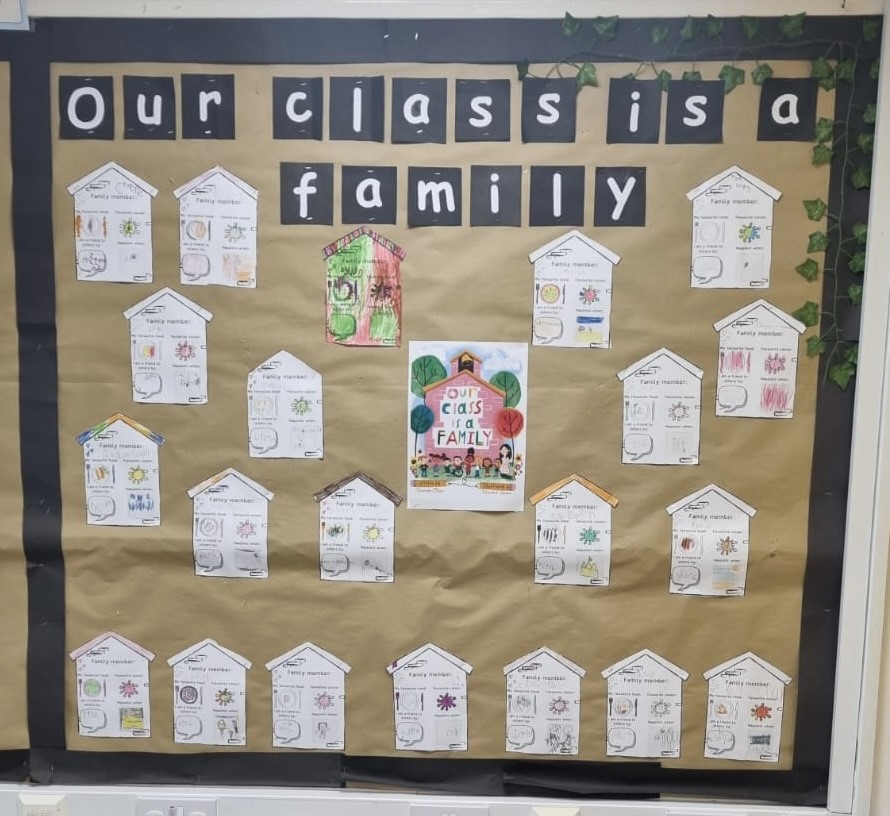
- PSHE, British Values and SMSC displays throughout school reinforce the PSHE curriculum.
Cross-Curricular Integration & Enrichment
Computing & Science: Direct cross-curricular alignment connects online safety to the Computing curriculum and bodily changes, growth, and hygiene to Science units.
Impact
The impact of our PSHE curriculum goes beyond academic testing. It is measured by evaluating how effectively pupils apply personal safety, emotional regulation, and positive relationship choices in their everyday lives.
By the time our children leave our school they will:
- be empowered decision makers – articulating boundaries, recognise abusive or unsafe behaviour and know how to report concerns.
- be able to approach a range of real-life situations and apply their skills and attributes to help navigate themselves through modern life.
- be on their way to becoming healthy, open-minded, respectful, socially and morally responsible, active members of society.
- be inclusive classmates, demonstrating empathy, reject stereotyping, celebrate diversity, and uphold equal rights in modern society.
- appreciate difference and diversity.
- recognise and apply the British Values of democracy, tolerance, mutual respect, rule of law and liberty.
- be digitally literate citizens, critically evaluate online content, spot cyberbullying, limit screen time, and maintain a respectful digital footprint.
- be resilient learners, apply coping mechanisms for emotional self-regulation, talk openly about mental health, and seek support when needed.
- be able to develop positive, healthy relationships with their peers, both now and in the future.
- understand the physical aspects involved in RSE at an age appropriate level.
- have respect for themselves and others.
- develop a positive self-esteem.